You will hear it at least once in your candidature: You haven’t read enough.
And you will inwardly roll your eyes and wonder what the big deal is. The big deal is this.
The more you read, the more you take in new information. The more you take in new information, the better you get at noticing strong and weak ideas. You start to know things.
Without you even realising, you become discerning. You get a feel for a way of knowing that you cannot get if you don’t read.
I can feel a bristle. Yes, reading is tedious. Especially when you have things you want to say and the reading seems to be getting in the way. But look at what happens when you don’t read.
You end up looking foolish. Or, worse, like you don’t know your area. And all of the research you have done goes to waste.
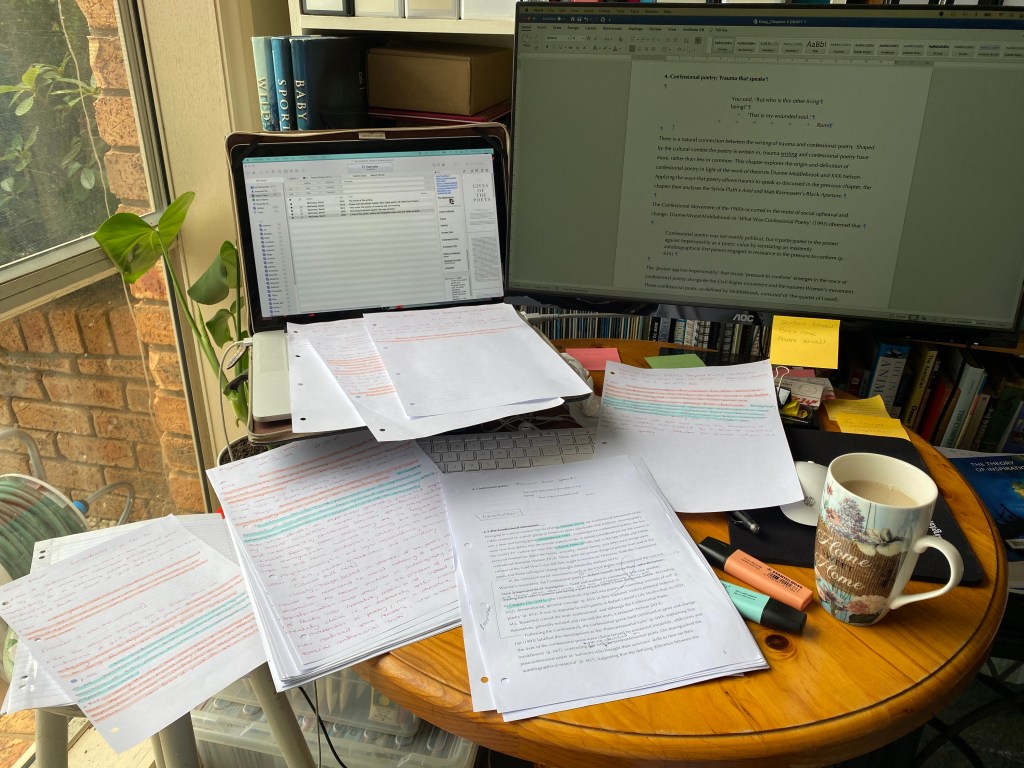
Reading is the quest to understand what has been said already about your area. Research is all about adding to that knowledge, not declaring that the knowledge held by experts is a conspiracy.
Yes, I’ve gone there.
As a researcher, I have sunk hours upon hours into my research. I have written up thousands of words that I have then, thanks to continued reading, debunked and deleted. I have tested my theories against university and industry experts who have told me the truth about the mistakes I have made. And I took that feedback. I kept on learning.
It’s like a stone in my shoe watching people declare that they have ‘researched’ whatever their current irritation is, only to open their mouths and show in their opening sentence that they haven’t fully understood the topic. Research is about understanding the history of a topic, its progression to this point and how you can, knowing these things, add to it. Oh, and that might include understanding some very specific and difficult mathematical or scientific formulae.
Here’s the thing about experts. They have done the reading for us. They have put in the long hours of questioning, thinking and experimenting to add to what we already know. Even if we don’t agree with their findings, we can respect what it took to get there, and then initiate our own research projects to debunk their findings or find another researcher who has already (if we don’t have those skills).
As I near the end of my research project, I have become an expert on poetry and trauma.
I know, right?!
Funnily enough, I now know things about these areas. Things I didn’t know when I started. I can legitimately call myself a literary trauma theorist, with new knowledge to add to the research that is already there. (Yes, I am onto the conclusion and currently writing up the new knowledge I am contributing.)
By the way, writing up your findings is much easier when you have done the reading. Your assessors are going to love your strong academic referencing, demonstrating just how much time you spent reading, and they will be less likely to find an area that you have missed. No one wants to have to resubmit.
What if you aren’t a researcher?
Read.
Look at both sides of the argument. Question anyone who either sounds too good to be true or like a nut-job. Check out some experts. Look at their credentials. Be curious.
And please, for goodness sake, use your common sense. You might not be a researcher doing a PhD but you still have a brain.


 This Writer's Life
Well written Shelly. Thanks – love your posts 🙂
LikeLike