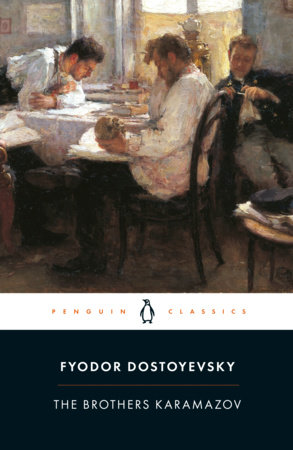
For funsies, I started reading Dostoyevsky’s The Brothers Karamazov. It’s about a hopeless father, his three sons, and the death of the youngest.
It could be inferred that my reading of Russian literature is an attempt to understand the situation in the Ukraine. In some ways, it is. I am not a particularly political person and have not kept up with the nuances of the situation. However, I care and so engage in the way most natural for me.
I read.
Then write.
And literature didn’t let me down.
From 1880, Dostoyevsky summed up not only a political situation, but much of what is happening in our world with vaccine hesitancy, discrimination and hate, and even in our own lives.
When we lie to ourselves
The one who lies to himself and believes his own lies comes to a point where he can distinguish no truth either within himself or around him, and thus enters into a state of disrespect towards himself and others.
Dostoyevsky, The Brothers KaRamazov, Penguin Books, 2003, p. 63
This isn’t a concept that sits well. Of course, I tell myself the truth about who I am and what I can do…
Don’t I?
Where do the lies begin? With our parents? Our teachers? Our friends? Our earliest experiences?
No one gets up in the morning and decides ‘I’m going to lie to myself and to those I love today’. It’s deeper than that. It’s being dismissed or pushed aside and taught that you don’t matter. It’s being disappointed in your life and blaming someone else for your lack of decision making. It’s comparing yourself to others and deciding you are either better or worse than them, rather than simply different.
So we lie to ourselves and we believe those lies.
Then we come to a point of no longer being able to discern truth in ourselves. We can’t tell when we have said something out loud that is wrong, or overblown, or emotionally toxic. We see and hear ourselves doing and saying things that are sometimes true and sometimes not true. What we teach ourselves is that we cannot trust our internal self nor the representation of that self that we create for the world around us.
Logic says: if we cannot trust ourselves, then we certainly cannot trust others.
The lights switch on for me here: those people who are dubious about societal structures—antiestablishment in their words and deeds—are showing me that they have spent a long time lying to themselves. Don’t mistake me here: questioning society, standing up for those less powerful, and making things better, is not the same as believing that your GP is in on a global conspiracy to inject tracking devices into your body.
Telling yourself the truth, as ugly and unpleasant as that can be at times, results in something of immense value: the ability to trust yourself and wisely discern trustworthiness in others.
Trust—knowing that you can believe the scientist because she has studied this one thing intensely and knows about it—is foundational for getting along together and being our best selves.
The consequences of lying to yourself
The one who lies to himself is often quick to take offence. After all, it is sometimes rather enjoyable to feel insulted, is it not? For the person knows that no one has insulted him, and that he himself has thought up the insult and told lies as an ornament, has exaggerated in order to create a certain impression, has seized on a word and made a mountain out of a molehill—is well aware of this, and yet is the very first to feel insulted, feel insulted to the point of pleasure, to the point of great satisfaction, and for that very reason ends up nurturing a sense of true animosity…
Dostoyevsky, The Brothers Karamazov, Penguin Books, 2003, p. 63
Let’s break it down.
When we lie to ourselves, we cannot trust ourselves. This leads to us not trusting others. Life then becomes a series of events in which we are wounded or hurt for we must protect ourselves against anyone else telling us the truth. If we cannot tell ourselves the truth, we certainly don’t want anyone else doing it!
This is a place of defensive upset. Flourishing slips away as there is no acceptance that being who we actually are is, indeed, a good thing. There is simply wasted energy in proving that we deserve recognition (or whatever it is that we want).
This brings us to the point of taking pleasure in offence.
Why wouldn’t we? We aren’t taking pleasure in the truth of who we are. We aren’t taking pleasure in noticing the truth of who others are. It is much easier to avoid the hard work that truth is and to take pleasure in being offended instead.
We’ve all been there, either being secretly smug that someone was rude to us and gave us a reason to be upset or experiencing the offence that someone has taken against something we have said or done.
Have you ever tried to apologise to someone who takes pleasure in offence? They are greatly pleased by the apology. They experience powerful ‘high’ and begin to watch carefully for the next opportunity to be offended, seeking out the next ‘hit’. On and on it goes, until you finally come to see that it is not you who is being offensive but the other whose offence has grown into a state on animosity.
There is little to be done in this situation. You cannot change someone who is taking a great deal of pleasure in being upset by you.
Tell yourself the truth. Can you really be bothered with a relationship like this?
No, neither can I.
Dostoyevsky’s point that lying to yourself leads to true animosity toward others seems to be a narrative of our current day.
People are protesting, being violent, are rude to others, and feeling very pleased that they are in the “right”. (I am thinking here of the things happening in Australia at the moment and am not wishing to simplify situations of war. )
What can be done?
It will not work to tell the truth alone—although this is a good place to start. You will simply offer more to be offended by and give them more to hold against you.
No. There must also be action.
Begin by telling yourself the truth. How have you contributed? What are you wrongly offended by? What have you put up with for far too long, believing the lies others told?
Tell yourself the truth until you begin to be able to trust yourself. This might take some time. Watch what you say out loud. Listen for when you are saying things that are not what you mean. Begin to kindly tell the truth and trust that you are, indeed, telling the truth.
Hold firm for the backlash. Once you begin telling the truth, the easily offended will react poorly. Tell the truth anyway and then take care of yourself.
You aren’t meant to be spending your time making the offended feel better. Apologise when it is needed. Push back when it isn’t.
And, for goodness sake, set some boundaries. In order for you to contribute to the greater good, to make this world a better place, you need to see the truth of a situation and then act accordingly.
If you need space, take it. If you need to break with someone, do. If you need to work through the chaos this person is causing, see a therapist.
Truthful action is the foundation of wisdom. You will begin to know and trust yourself. From this, you will begin to identify the trustworthy and the untrustworthy.
True flourishing comes from a place of truthful contentment and meaning. Not offence.
I had no idea when I started The Brothers Karamazov that I would find such a fundamental truth. I imagine if knew more about Russia and Ukraine’s political situation, Dostoyevsky’s wisdom would apply there, too. But it is beyond my expertise.
Still, I can see that the Ukrainians are holding firm to the truth of who they are and who they want to remain. I stand with them.

 This Writer's Life