Yesterday I binged Soren Kierkegaard’ s Fear and Trembling. The result is Kierkegaard’s voice in my head and syntax and the following application of the ideas I have been soaking in applied to conspiracy theorists.
While I have used male pronouns, this isn’t a reflection regarding men. I chose the male pronoun for sheer convenience.
So, here it is. My philosophical offering.

My Kierkegaardian reflection on conspiracy theorists and the paradox of being both ordinary and extraordinary
A man unwilling to face his own suffering, his own limitations, that he, indeed, worsens his suffering in the hope that sympathy will elevate him, this man has opened his heart to theories and deceptions, to chase the absurd to the wonderland that is the conspiracy theory. For the truth is his life is ordinary. He is loved by some and not by others. He is good at this and not at that. He never has enough money or fame and so power and notoriety become the destiny of his heart. He wraps these in the proper, the veneer of unwanted suffering, of being elevated above because he is drawn low. And so his secret knowledge, that the world in one form or another has pit itself against him, suggests that the world is against the special while the ordinary rot in their ignorance and want.
The conspiracy theorist is the embodiment of what he believes to be true—that he is so far above (or below) the ordinary that he is the target of those who would secretly bring him down, and only he knows it. The rest of us are fools or sheep and by necessity must be so that the one who knows is not overwhelmed by the ordinariness, the pattern that is repeated, that is his life.
He longs to be a hero and so makes himself heroic; his knowledge and his suffering make him so, forgetting that to be heroic is to live an ethical life, to repeat the struggle of our parents and their parents and those, again, before them. The ordinariness of this, the deflating of the desire to stand apart, the sheer depression of the past, these drive us to find the interesting and exciting, to create more in fear of less.
What I mean to say is this: we are all at risk of the rabbit hole, of making ourselves grow big and shrink down, of creating an enemy who wishes us dead—who sees the playing cards around us fall to their demise and who will pursue us in anger and hatred—all for the ends of excitement. For there is nothing much exciting about cleaning house or paying bills or arriving at work on time. These are time-eternal tasks. (What I mean to say here is that they are tasks that every person ever born and grown to any sort of adulthood has had to attend to.)
In one way or another, those tasks live on while we grow old and die. Heaven-forbid we should attend to these things in such a way as to admit our ordinariness. Kierkegaard points out in a footnote in Fear and Trembling (1985) that ‘passions make all men equal [for] the explanation lies in the fact that in the same situation probably everyone would have said the same thing’ (p. 85, emphasis original author).
What is the point of it all if I am to be only ordinary?
The point is life. Live an ethical life—so as to not corrupt who you are—and see that while someone else in your position would do as you do, they are not, in fact, in your position. You are the only one in your circumstances. You are the embodied possible responses to those circumstances, underpinned by holding firm to the truth.
Falsehood pursued for the sake of avoiding the ordinary, for fear of being normal, is filled with hidden sorrow and unnecessary suffering. One must angrily defend one’s position and break relationships that would otherwise proceed in normal insignificant ways in order to prove that they, themselves, are not the ordinary thing they fear. When, indeed, they are.
In doing this, the conspiricist finds excitement and drama, elements missing from his life, the circumstances only he is in as he falls asleep and sees a white rabbit looking at a pocket watch.
Where does this leave the ordinary among us, that is, those of us at the party and not asleep under a tree? As a group we appear the same and we are until one extrapolates the elements of the equation, identifies the individual numbers and labels the relationships between them. Such a complex equation is, in itself, unsolveable. The mathematics of life is such that we are all numbered separately, individually.
Place us in the same part of the sum and we will function in the same way. We all add and subtract in the same manner. At a distance, the variations in the actual answer are neither here nor there. But considered closely, the apparent minute difference matters. This is why being the number you are matters. It does not mean, by the way, that you must stay in the sum you find yourself in, only that any number in that sum will respond in the same way.
We have all heard that ‘the whole is greater than the sum of its parts’. Attributed to Aristotle, the meaning is to say that together we are stronger than apart. The problem with this is the embedded dread of only ever being the ‘whole’ and never to matter as a ‘part’. Although you function in your part of the sum as any part would, there is an indisputable fact: the outcome will always be slightly different because it was you, and not someone else, in that part of the sum.
What seems to be a contradiction here is, instead, a paradox.
While it is you who does the thing that has been done countless times before, it is you who does it.
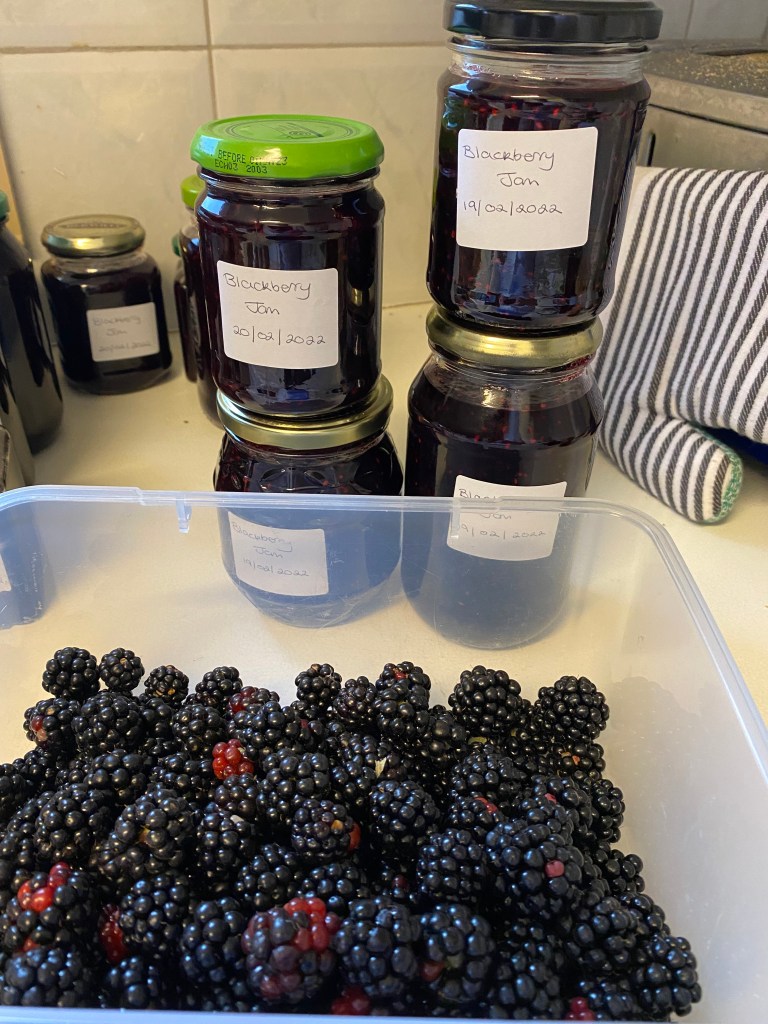
Let’s take a mundane example. I like to make preserves, jams and jellies. Before me, my mother made preserves and my grandmother before her. Beyond that I can presume preserves were made but I have no evidence to prove it.
I like my jams to contain a little zing, lemon juice to balance the sugar. My mother made apricot jam that I detested, and my grandmother made jam I never tasted, although it can be reproduced thanks to her recipes. We have all performed the same function when placed in the same part of the equation: enough fruit, plus sugar, plus a desire (for whatever reason) to make preserves.
This is an equation that is not unique to me or my family. Plenty make preserves. There is nothing signifcant about making preserves. We don’t celebrate it as a culture (aside from the odd agricultural show) and there is no James Bond movie in which the hero stops to make a batch of jams and jellies that will defeat the bad guys—I am no James Bond officiado so if there is, I am happy to change tack. But this lack of cultural celebration over preserves is no reason not to turn a box of oranges into pots of marmalade.
It is ordinary, common. Yet, give a friend a jar of blackberry jam and see their face light up. You have thought of them, shared your good fortune with them, and when they taste the sweet zing on their toast at breakfast, whether they think it or not, they are reminded of the sweet zing of that particular friend. The paradox here is that in making the preserve nothing new has happened but in making this particular preserve something new has happened.
To fall into conspiracy is to forget the beauty and significance of the ordinary. To be offended at the suggestion that you are ordinary is to forget the paradox you live in.
You are both orindary and extraordinary.
Your life has been both lived before and is new and unknown. Draw your eyes to the wonder of your ordinary world. We all climb into our beds at night. There is nothing special about that, unless you try sleeping in a bed not your own. It is warm and clean and soft enough but it is not yours. It is a place to sleep but it is not a place to sleep. The paradox is clear: we all live as each other does and yet we don’t.
The unknown in the equation of life is not you, it is the circumstances you find yourself in. In the same circumstances, we would all react the same way. But we are not in the same circumstances. In the 1970s I was born female to a teenage mother. Had I been born male, my circumstances would have been different, likewise had I been born with a more agreeable nature, or, even something simple, like straight hair, the shape of my life would be different. These are the circumstances I found myself in. Had any one else been born into them, they too would likely find themselves binging philosophy and writing in a yellow, grid-lined journal.
I am not degrading my own uniqueness or the power of personal choice. What I am considering here is what can happen when one ceases to see the paradox at play. Life is a two-sided coin. Ordinary on this side. Extraordinary on that. To toss away ordinary coins in pursuit of the extraordinary is to throw away the richness of life.
To seek to feel special through secret knowledge and imagined persecution is to forget that there is a great deal to be had in the ordinary. For to be ordinary is, paradoxically, to be extraordinary.
It doesn’t need to be forced.
It just happens.
So let it.

 This Writer's Life