Your poem is written and edited, and you are wanting to be able to say:
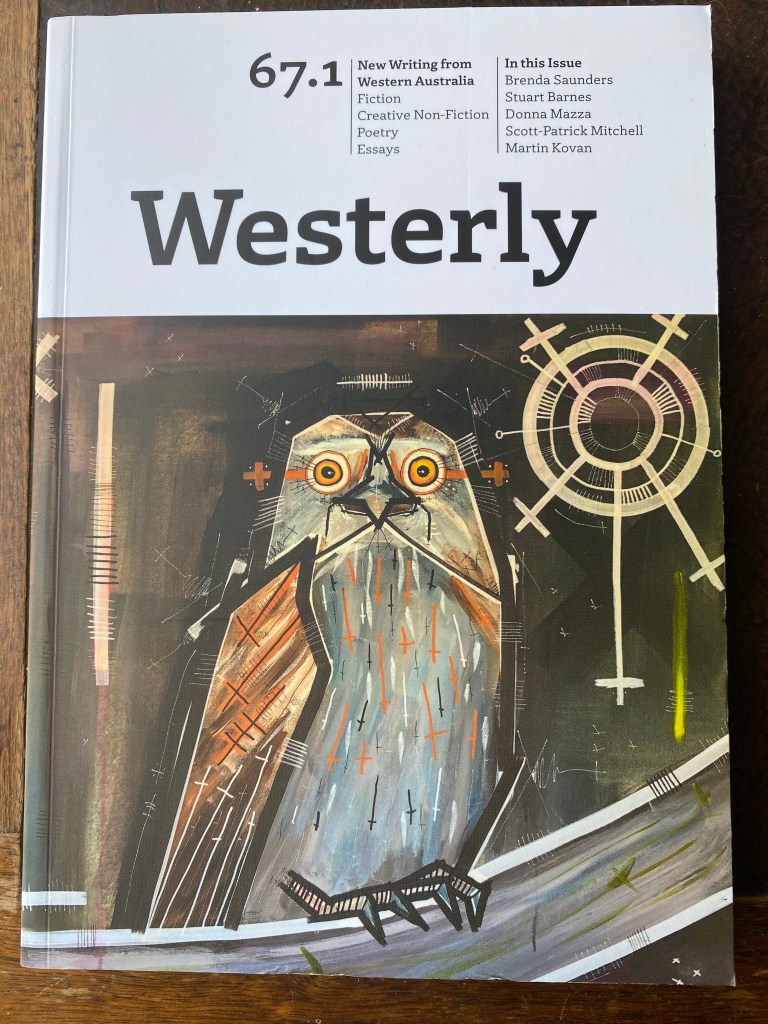
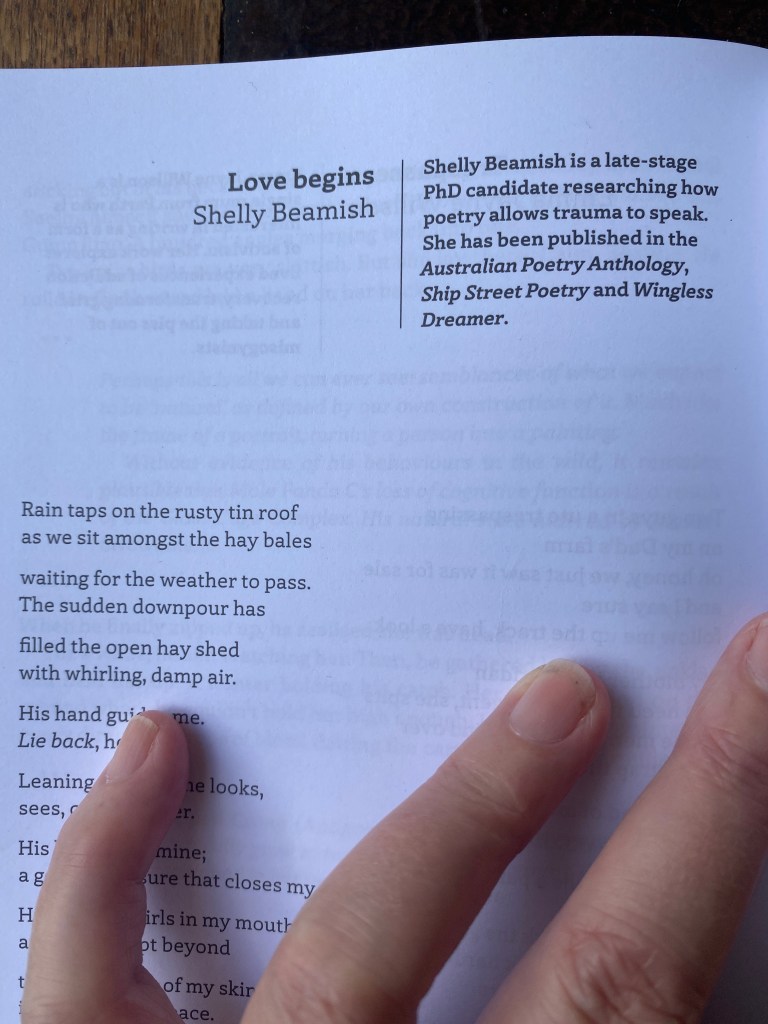
My poem ‘Love Begins’ has just come out in Westerly 67.1.
There is a process before you get to this stage.
1. Know your market
- Look up literary journals
- Start with those in the country you live in
- Take notes about the types of works they publish
- Decide if you would be happy to have a piece published with what you are reading.
2. Know yourself
- What type of poetry do you write?
There is no point in submitting Australian bush poetry to a journal committed to dark humour, unless, of course, you twist the bush ballad into an ironic consideration of the Australian gothic. If you write like that, go for it! - Who are you hoping will read your work?
Do you love to write verse that conveys deep meaning on special occasions? Maybe look into the greeting card industry.
Do you, as I do, write somewhat dark, trauma poetry? Then a collection of Christian verse probably won’t be very interested. - Are you easily offended? Does rejection feel catastrophically overwhelming?
Then maybe reconsider whether you really want to be published. There are loads of reasons why poems aren’t accepted. Sheer volume. Preferences of the particular editor. Time of day the editor reads your piece.
Still going ahead? Okay…
3. Sign up for Submittable
No. No one is going to steal your work or your identity. It is a platform for managing submissions and it makes things easier. It keeps track of what stage things are up to and allows you to search for markets you might not have been aware of.
You are emailed each time something happens with your submission and can easily manage what is happening with your work once it is accepted.
Not everyone is on Submittable, so you will need to keep your own records, too.
4. Get your Social Media to work for you
Whatever platform you are on, find and follow the journals you are interested in. Look up writing groups* and see if they recommend anyone.
*A note about online writing groups: They can often be a place where people put work and seek feedback. Don’t. You need to…
5. Be careful about what you put online
Journals don’t want to publish something they are asking people to pay for it if is free online. This includes posting a poem on FB, Insta, LinkedIn, etc, etc, and your own blog.
Be mindful about not sending work to individuals you don’t know or haven’t paid (and have a contract with after checking out their credentials). It is too easy to lose control of where things are and who has what.
6. One poem to one journal
It is common courtesy to send one poem out at a time. That doesn’t mean you haven’t got a half-dozen out in the ether all at once. It just means that you aren’t sending the one out to a whole lot of different journals. It’s rude.
It does mean that sometimes good poems get tangled up in other people’s processes and are out of action for a little while. That’s part of the process that has to be accepted.
7. Only submit when submissions are being called for
There is no point in sending something into a journal when they are not calling for submissions. They are not in the right stage of their publishing cycle to even consider your work.
Submission dates can usually be found on their websites.
8. Read the guidelines and follow them
Want to annoy an editor? Ignore the guidelines.
But, but, but…no…
Do things their way. There is a reason they are asking for New Times Roman and double-spaced (or whatever). The technical aspects of production are less complicated that way.
Also, think about an editor reading submission after submission. Their eyes will grow tired, their attention span will waver, and they might be thinking about getting dinner on. The last thing you want to do is make things harder for them.
But using XYZ font will catch their attention. It sure will. But not in the way you want. Perhaps brilliant work will outshine ignoring the guidelines. I doubt it. People are people. What’s the harm in doing it their way?
9. Don’t nag
You followed the guidelines and sent it in. You should receive an acknowledgment email within a day or two of submitting. Then let it be.
The journal will be busy organising the submissions and it will take some time before all are read.
This is where things can get a little messy. Some places will give you a deadline that if you haven’t heard by then, consider the answer a no. Some places will send a ‘thanks, but no thanks email’, and some will say nothing.
The last group can be contacted after a few months BUT check their website first. Maybe they have had an illness or something happened to delay things.
Always assume the best and be polite.
10. Manage your expectations
Publishing is tough. There are factors outside of your control and lots of reasons why the answer is probably going to be no.
If you assume a no—but not in that devastating way—and you get a yes, it is a sweet, sweet moment.
Truthfully, a no is always disappointing.
I submitted what I considered to be an excellent essay to the Griffith Review essay competition. Feedback from my trusted, experienced reader was that it was the excellent essay I thought but wasn’t quite to the style of the Griffith Review. He suggested I should give it a go anyway as the experience of submitting is valuable.
I briefly daydreamed about winning, as you do. Then disciplined myself to the idea of being longlisted. Then, realistically, contented myself with knowing who the judges were and that they would read my essay. When the rejection email came I was casually cruising my phone while walking through Bunnings to get potting mix.
‘Damn,’ I said to Hubby, ‘they should have known my essay was the best one there’ and kept going.
I am disappointed but that wasn’t the time or place to throw a tantrum about it. Nor is this.
Next time I will pay more attention to the style of the Griffith Review.
11. What to do once you get accepted
- Tell everyone you know! This is a big deal. Celebrate!
- Follow the publisher’s instructions. They will likely want you to sign a contract, giving them permission to publish. Don’t stress about the poem then belonging to them. You did just sell it, after all.
What happens is this: each time the poem is referred to, after publication, the reference should include where it was published. This is a point of honour. You want people to know that your poem is published. - Promote the poem but don’t undermine your publisher by giving it away for free.
12. Money?
Sometimes you will get paid but most of the time you won’t. It isn’t an indication of the quality of your work. It’s an indication of the current literary publishing situation. Literary journals aren’t exactly on best seller lists. Their margins are tight.
You have to decide what you want.
I want to be read.

 This Writer's Life