In order to write, one must read.
Let me clarify: in order to write something beyond a diary entry or facebook post, one must read.
Not that I have anything against diaries or facebook. I write in both, often, and quite badly. It’s to be expected. The genres allow for it. Almost call for it.
I’ve been reading a lot. Emphasis on the old “a lot”. It’s two words, not one. And, yes, my reading lately has been mostly student essays. Weeks and weeks of student essays. Too much of this reading and I begin to question my own spelling and grammar. Even my own existence.
English skills can be tenuous at the best of times. Throw in fifty-ish—I’ve given up counting—examples of two words becoming one and one word becoming two and any sane person begins to question the meaning of life.
Why bother writing anything down? Let’s just text it all to each other, and be done with it.
They read texts readily enough. We all do. If you stop to notice, you’ll feel the dopamine hit surge through your body each time a notification alerts you that someone is thinking about you, even if it is only a Rivers ad. Still, a little surge.
Not so the good old essay. Learning to say what you mean to say in the way you mean to say it so that what you have said makes sense to the person you are saying it to is, in my opinion, an important skill.
It’s okay. You can put the soap box away. I’m not ranting. There is no anger here. I’m too tired to rant about literacy rates and student focus and the English teacher’s burden of receiving twenty-five essays one day and being genuinely asked the following day ‘have you marked our work yet?’.
When it is busy like this, finding time to be a writer—rather than trying to teach teenagers to be writers—becomes as challenging as finding the correct use of ‘a lot’. Two words, folks. Two words.
I only teach three English classes. Four is most definitely a breaking point for even the most steady, self-assured English teacher. Three classes still push against your personal boundaries, wrestle with the thought that you might like to enjoy the garden and write some poetry, and then throws you up against the ropes and positions themselves for the final takedown.
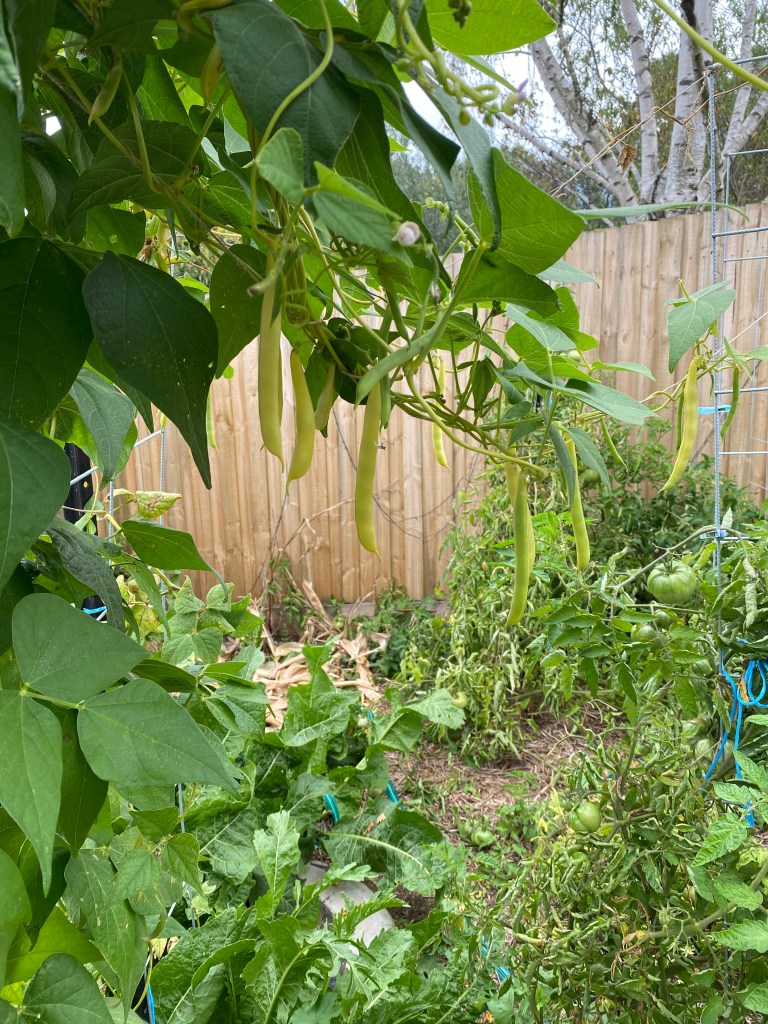
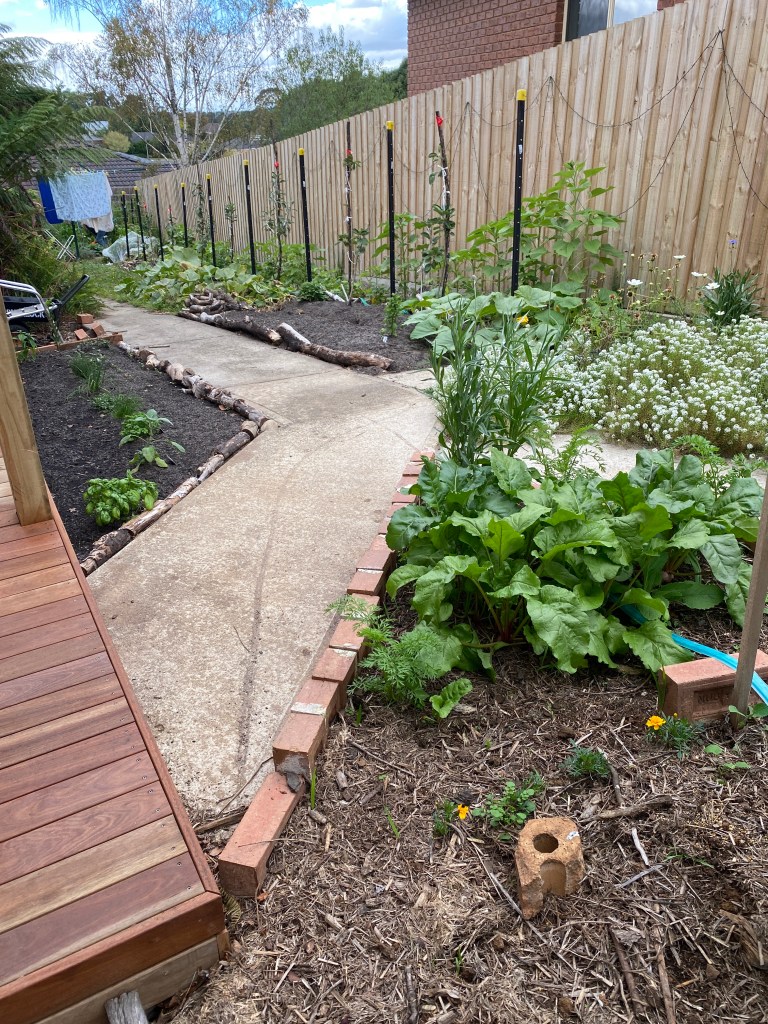
This is where you tag in Boundaries, that big, tough guy who can take it. You climb out of the ring, turn your back on the action, and go outside. The garden is beautiful, after all.
Guilt will follow you. Deadlines will nag at you. Colleagues will have to be told the truth—you just couldn’t face any more essays. Your mind begins to wonder if ‘a lot’, ‘a table’, ‘a nervous breakdown’ really are one word. Three words into one is, without doubt, the coup de gráce to the psychologist’s waiting room.
Why do it? Why teach?
In class, I decide to write the same essay I set for the students. They assume that essay writing should be easy, that you can write any sort of sentence and it will do the job—a sentence is a sentence, after all.
So I put pen to paper.
I break the silence in the room to ask my assistant who is given to cleverness ‘what is a word for a type of remembering that is unhealthy?’
She responds with the name of some psychological disorder I immediately forget—possibly something I should mention to my psych. I’ll make a note of it.
‘No, no,’ I reply, ‘that’s too strong. If that is one end of the spectrum and memory is the other end, what is in the middle?’ I often go on about the strength of meaning and the nuance of word choice.
‘Nostalgia,’ comes a voice from the back of the room. She scares me—I didn’t think she was listening.
‘That’s it!’ I get all excited and point at her like she’s kicked the winning goal in the grand final. ‘I’ve been trying to think what it was for days now’ I confess, giddy with relief. The article we are analysing has a nostalgic tone to it and it was bugging me that I hadn’t been able to think of the word.
The room went still. All eyes on me.
“What?’ I mumble, ‘I like to think about words…and this one was bugging me…and…never mind.’
‘I thought nostalgia was a good thing.’ It was a student who is finding analysis head-ache inducing.
‘It has a negative edge to it,’ I explain. ‘Someone who is feeling nostalgic tends to view the past through rose-coloured glasses. They feel that what has gone before is better than the present.’
Students nod and we all go back to our writing.
Learning to write is hard.
Writing didn’t really come together for me until I was at uni. Before then, I kept a teenage diary—stored in a box that should be labeled ‘embarrassing marks on a page that have nothing to do with me whatsoever. I also wrote essays for my teachers. Mr Jackson said my economics essays sounded like I was speaking to him—I’m not entirely sure he meant that in a good way.
At uni, it clicked. Get your evidence, weave your argument based on your evidence, throw in an unsupported curve ball if you are feeling sassy. HDs. Give them what they want and everyone is happy.
This, of course, isn’t the formula for all writing or much writing beyond uni, truth be told. But it is a place to start. Once you have the formula bedded down, then you can really go places. Try going places before you understand the basics, and you are lost before you begin.
All of this learning-to-write business creates writing that requires reading. This is the thin edge of the wedge with teaching.
Students learn to write by writing. They need to know if it’s right. I can teach them to self-assess, and peer assess, and all of that type of thing, but at some stage, I need to read what they have written.
That reading, today, can wait.
Without boundaries, I’m going to need a lot—let me say it again: two words, folks, two words—of money to pay for mynervousbreakdown.



 This Writer's Life