As we drove away, I could hear the ongoing sounds of tiles being removed. A cruel trick on my part, inviting the dentist and his drill into my home and then leaving.
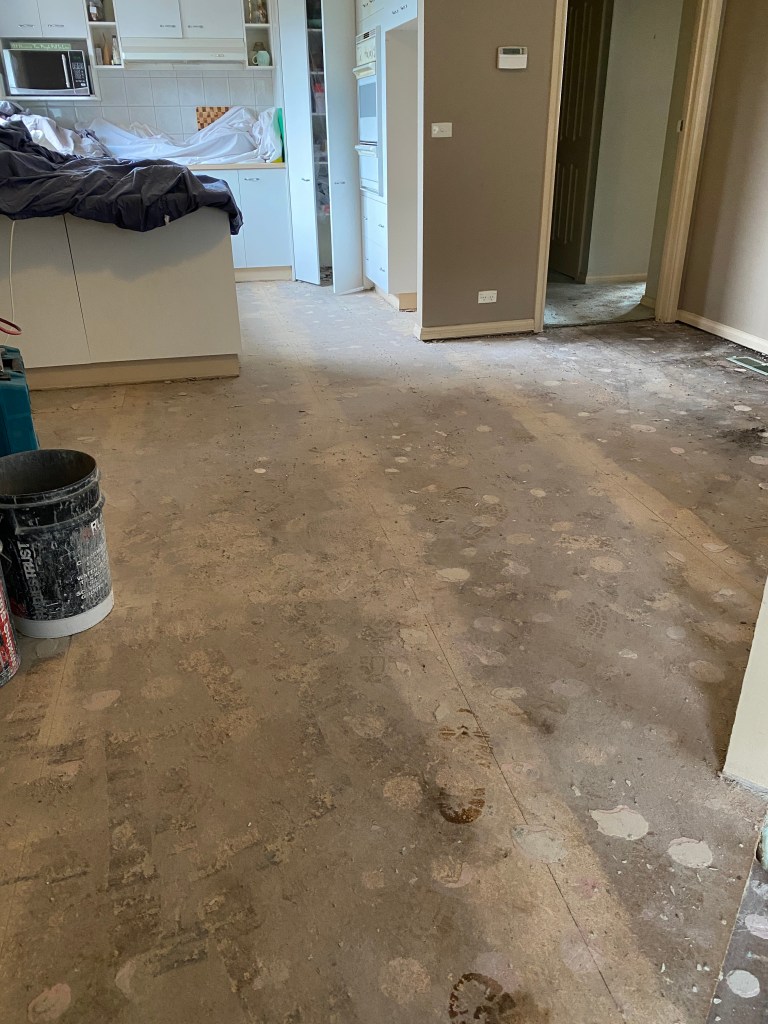
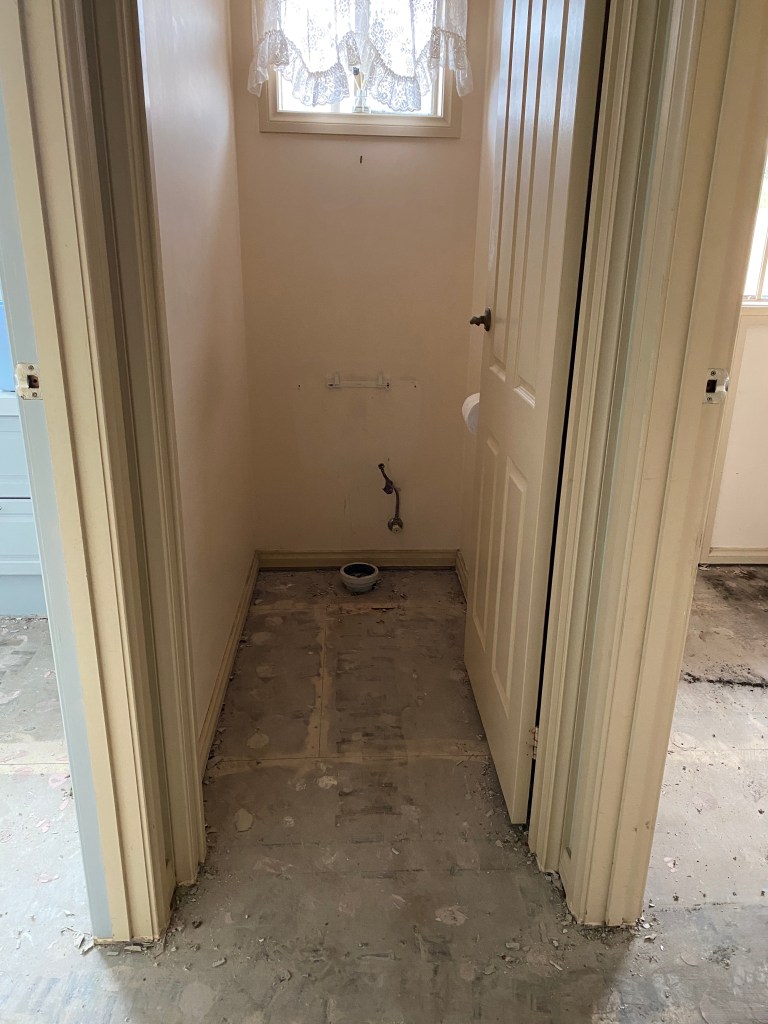
Returning later that day, we tip-toed between the rows of nails waiting to be pulled—tomorrow’s job—and breathed the still, dust-filled air. I resisted the temptation to clean and silently apologised.

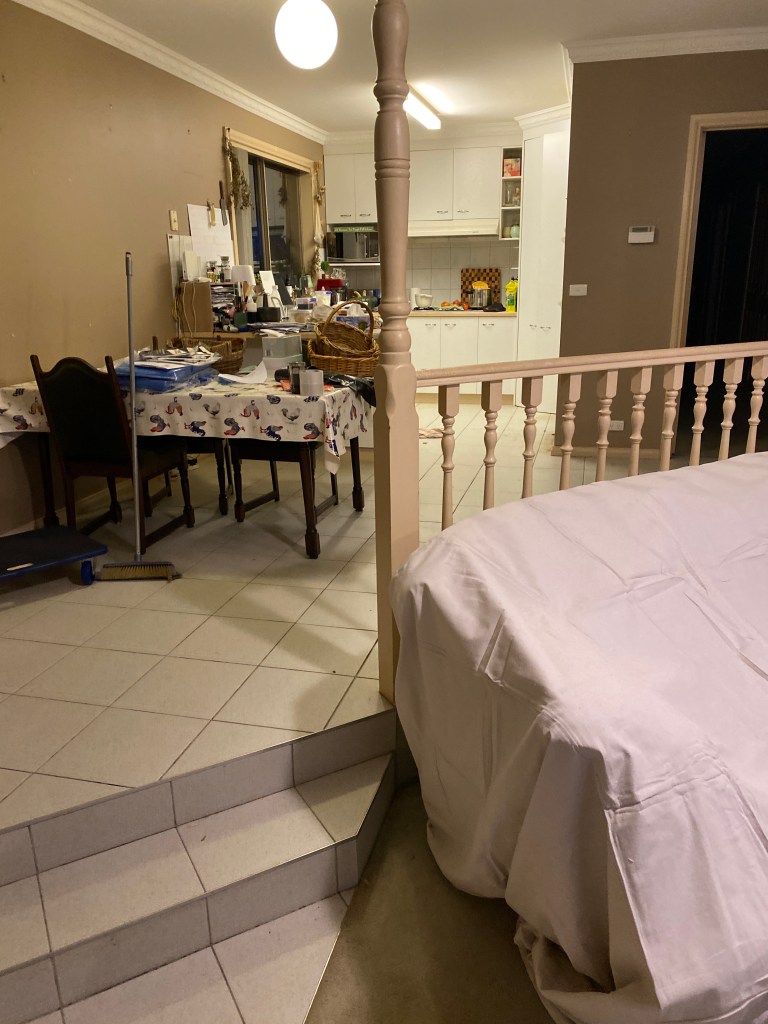
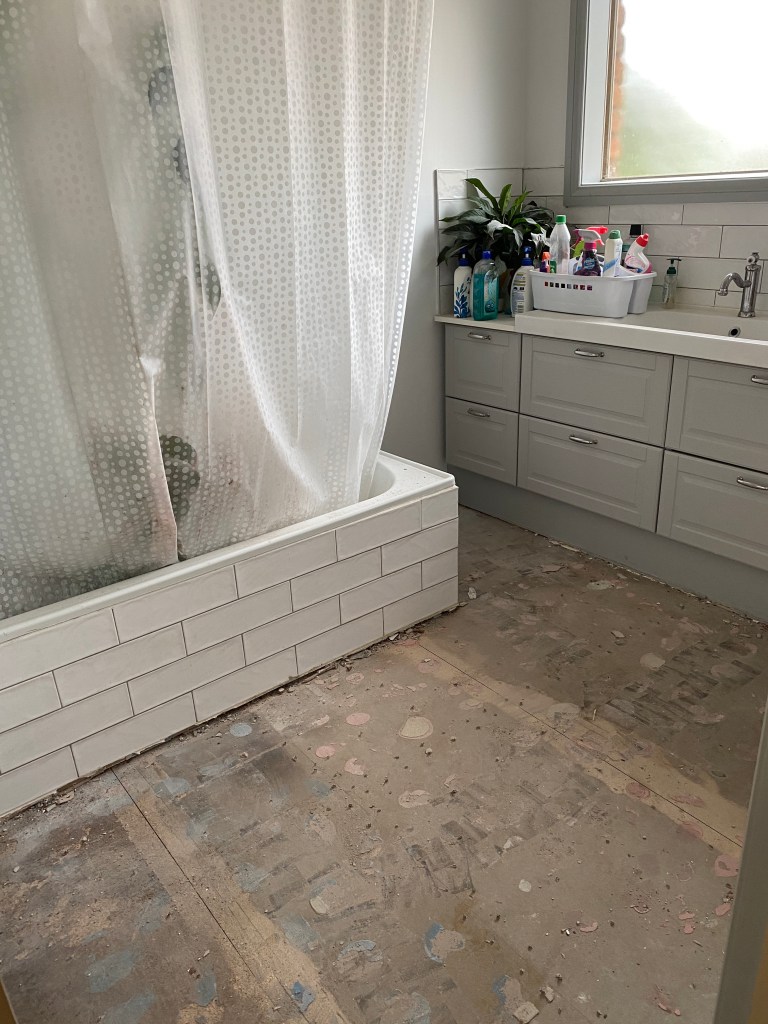
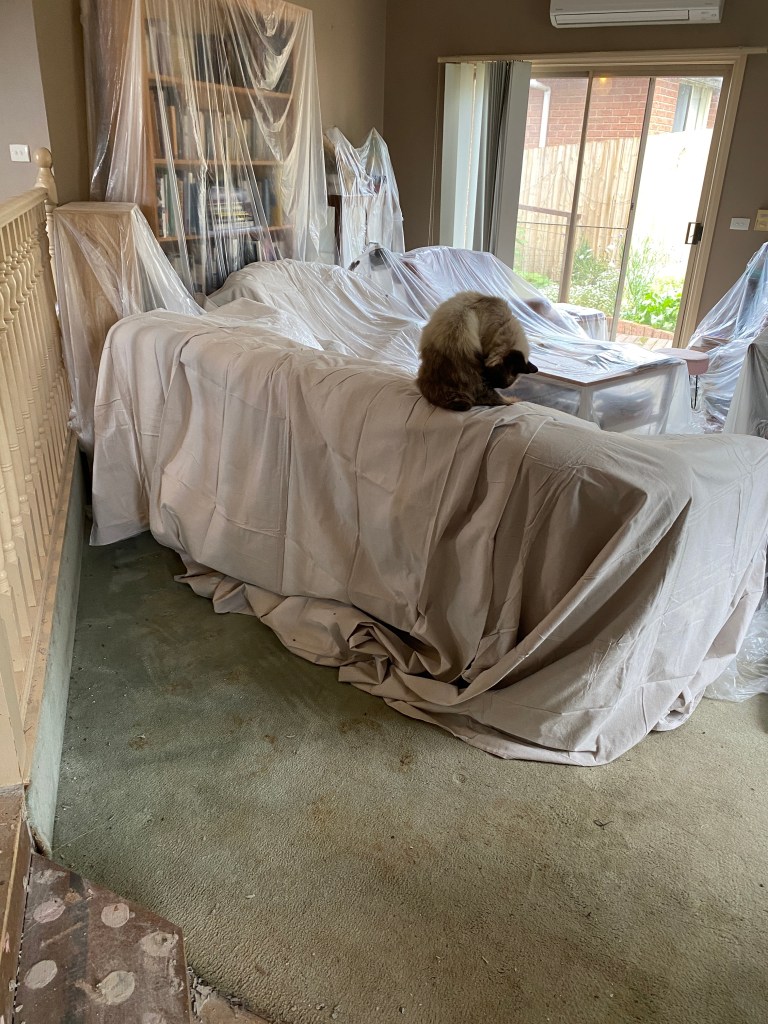
The thing is, I took a perfectly adequate home and revealed its most vulnerable self. There, for all to see, is the original chipboard floor, stains, cracks, holes, and all. In this state, the house echoes with our footfalls, forlorn cries, as we try to step lightly.
The house is, nonetheless, bouncing back. We moved the fridge, dishwasher, and washing machine back inside onto the exposed but functional floor. We are making do in a house that hasn’t been this vulnerable and bare for years.
This is resilience, the act of returning to an equilibrium that was lost. The emphasis here is on the act of returning. ‘Feeling more like my old self’ is a phrase that comes to mind. The house feels more like its old self.
Ultimately, however, we don’t want our house to return to its previous state. Our vision is that it becomes something more than it was, more than it currently is or has ever been. We want these vulnerable foundations to integrate with new materials, for the old to become part of the new.
Once it has, it will be both who it was and who it has become, both/and rather than either/or. This is post traumatic growth (PTG). Dr. Edith Shiro in The Unexpected Gift of Trauma (2023) explains that
Through the process of PTG, the person begins to see the wisdom and the beauty hidden within their wounds as gifts that completely change the way they see the world and how they participate in it.
Shiro, E (2023), The Unexpected Gift of Trauma, Piatkus, p. 50.
The gift of the wound—of the floor-guy using a jackhammer to lift well-glued tiles—is the opportunity for something new to exist. This includes the need to fix hidden problems, ensuring that what comes next will last.
The truth is simple. For that new thing to come into being, all that has happened up to this point has to have happened. While it isn’t much fun, the journey is necessary in order for a new floor, and a new way of living with that floor, to exist.
This floor, with all of its imperfections and all that has happened to it, is an integral part of what makes this house this house. There are no shortcuts and no quick exits. There is, however, work to be done.
Resilience, according to Shiro, can keep us from engaging in the work that must be done, keeping us from embracing the growth our trauma offers. We long for things to be as they were before whatever happened happened, choosing to stay in our adequate lives.
Tear up the floor. Examine the hidden. Work toward creating the thing that can only exist because of the wounds you have suffered.
It’s messy.
You will want to clean. You will apologise. You will feel sad and discombobulated. Resist returning to old ways. Resist resilience.
Embrace growth.

 This Writer's Life
Wow! Canât wait to see the end result. Very exciting.
Vicki
Sent from Mail for Windows
LikeLike